Author: admin

  • Why Don’t We Have Clean Streets Anymore? 

    Why Don’t We Have Clean Streets Anymore? 

    When I arrived here in the 1990s, Amsterdam was dirty. Spiritually and literally.

    Sex was literally everywhere. Before the internet there were establishments with ‘private video booths,’ and not just in the red light district. A rack of vulgar postcards stood in front of every tourist shop. Raves, combined with drugs and alcohol, created a raw, underground feeling that led to hooking up. Fetish parties had ‘darkrooms,’ and the gay scene was the best (and worst) in the world.
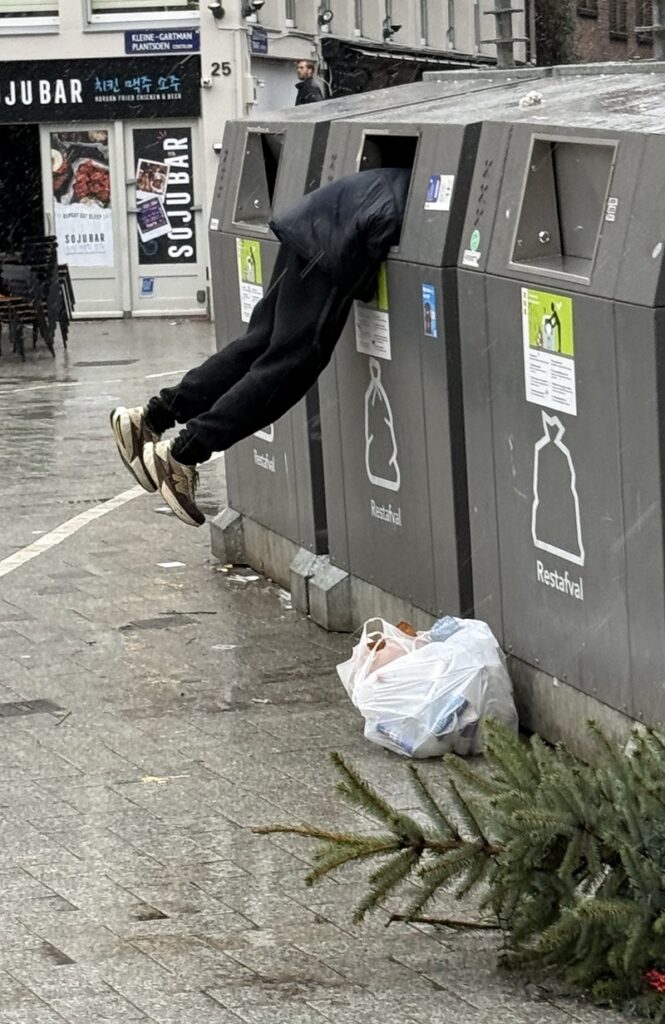
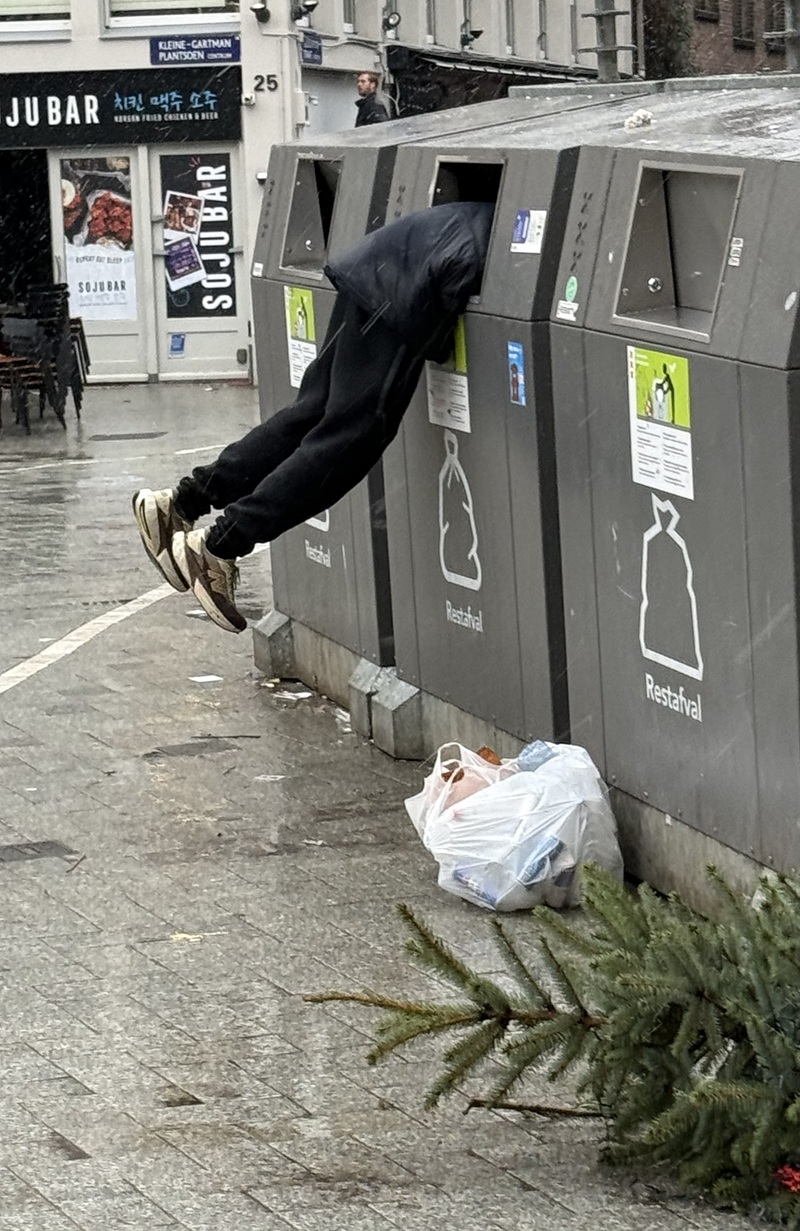
    The streets were dirty too. Dog shit was everywhere, and somehow that was okay. Tiny, always-full green plastic garbage cans were one quarter the size of today. We accepted this too as if fast food did not exist, and people only threw away empty cigarette packs and Sportlife gum wrappers.

    Getting a cleaner city was a long, slow journey, but we succeeded. More effective government, bigger garbage cans, better citizens and higher standards all helped. Flash forward to five years ago. People now cleaned up after their dogs. Regulations banished the sex postcards. Gay nightlife was destroyed by Grndr (and more inclusive socializing).

    The real problem was that the city’s garbage department saw its job as cleaning up at the end of the day. They did not see it as their job to maintain a clean city. This meant that starting at 15:00 on Friday, garbage would pile up around the already overflowing cans, to be cleaned up at 6:00 the next morning, before the city woke up.

    Most importantly two things changed. First, we replaced the 30 liter green bins on a pole with (after a inadequatre misstep to 50 liter cans) to the 120 liter brown, steel cans of today. And second, after garbage trucks picked up bagged, household trash, a team of human sweepers would brush the remains into the street where a street sweeper vehicle would suck them up. The streets were left clean.

    It all changed in 2023.

    In April, the national government implemented a comically poorly thought-out recycling plan. There is plenty of blame to go around, but let’s start with Groenlinks/PvdA/SP who pushed hardest in 2018-19 and Stientje van Veldhoven from D66 who helped make it law in 2021. In order to raise the can recycling rate from the then 77% to 90%, the Dutch government added a €0,15 deposit to cans.

    While more recycling is generally better, this plan had huge problems. It assumed all canned drinks were consumed at home, where many people do recycle.

    But what about people who buy a drink on the street, at a train station, in a movie theater, at a concert or at the airport? We have no way to return it. You can’t put a dripping Coke can in your pocket, so we throw it away. Yes there is a recycling machine in the back of Amsterdam Central and I’m sure in Utrecht and Rotterdam too, but come on.

    We should have just placed recycling bins for cans and plastic bottles in public spaces. Next to the regular garbage cans. For free. No deposit. Then we would just recycle. At stations you could just repurpose the newspaper recycling containers because, uh, this is 2026. No one reads paper newspapers. (I do actually. I learned Dutch so I could read het Parool).
    Retail outlets won’t take them back, and how could they? What would they do with them and how would they pay us our €0,15 in a cashless society? So we throw cans in the garbage, doing our part to not litter and keep the city clean. Then people at the fringes of society collect them and brings huge bags to collection points like Droppie on the Vijzelgracht.

    But unlike sanitation workers, the scavengers are not concerned with garbage. They damage our beautiful, €1000 garbage cans. They slice open household garbage bags. They get the money, we get dirty streets, and our politicians were surprised.

    Around the same time as the deposit introduction, some high priced consultancy advised the city to be more efficient with its street sweep teams. KPMG, or whoever it was, said the the ‘sweeper trains’ could be more effective if they didn’t follow slower moving garbage trucks and city ambtenaren defered to their better paid private consultants. Now garbage trucks left a trail of loose garbage that the wind was happy to spreed over a whole neighborhood. Deposit scavengers plus this change made the city the dirty mess it is today. Illegal dumping next to underground containers earns an honorable mention.

    And what have we gotten for the environment? The can collection rate has gone from 77% to 83%, (not the goal of 90%). To be fair, we probably deliver a higher-quality material stream since the cans are separated earlier, rather than at the dump.

    But is a 5% increase in recycled cans worth the big price we pay in Amsterdam? There are €4 million in extra cleaning costs each year, Importantly, this doesn’t include the broken garbage cans. A pro-deposit group reported that 12% of the cans were broken on a day their studied, but I bet that today that number is more than 25%. In the center, they are almost 100% broken. With perhaps 12.000 cans in the city, 25% would 3000 x €1000 = €3 million more in deferred maintence. PLUS dirtier streets.

    If we want a dirty Amsterdam, let’s bring glory holes in clubs. They at least made two people happy. But I dream about 950.000 happier Amsterdammers and a clean city, one that we had not that long ago. And replace the broken garbage cans.
  • Amsterdam is Not Full

    Amsterdam is Not Full

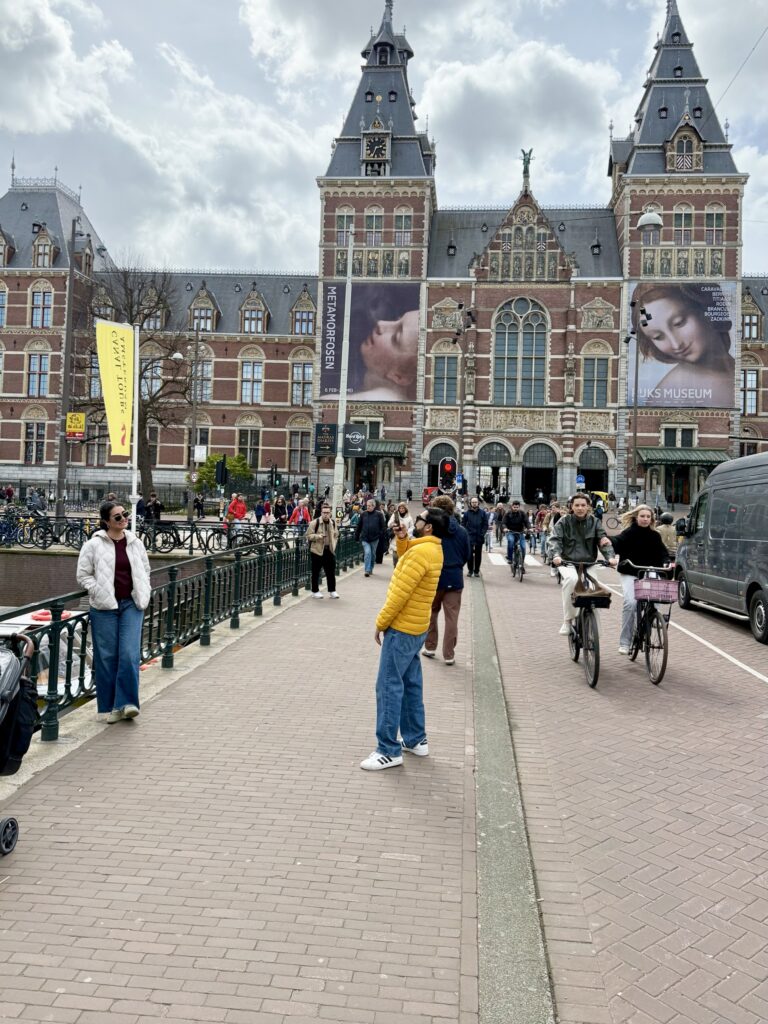
    It has been accepted by every journalist and many residents that Amsterdam is full of tourists; TOO FULL! And like the Louvre in Paris, the center of Barcelona and all of Venice, Amsterdam is no fun anymore because there are just TOO MANY TOURISTS! Everyone says it. Het Parool won’t stop writing about it. It must be true!!

    The foreign press agrees: CNN’s The Worst Cities for Overtourism lists Amsterdam first! No points for guessing which European city is being ‘ruined’ by tourists! The Washington Post offered this advice: Looking to dodge Amsterdam’s crowds? There are three remarkable towns a short train ride away. Uh, maybe you want to go to Zwolle, but I don’t. 

    Yes. There are more total tourists, but there is also more space on the street than before. I have been living in the center of Amsterdam for more than 30 years. In terms of livability, getting around and store variety, it has never been this good. My street still has two hardware stores, despite Dutch people’s preferences to order everything on Bol.com, hurting the local businesses they complain are disappearing.

    Despite larger numbers of tourists, most of the city and all of the center is LESS full and more manageable than ever before. This is because of bigger sidewalks combined with many fewer cars. From 2016, through traffic was banned from the center city and 10.000 parking spaces were removed. That space plus whole streets were given over to pedestrians and bikes. The North South Metro line (M52) removes another 10.000 people per hour from the streets (and trams). 

    Amsterdam neighborhoods like the East, Bos en Lommer and the Bijlmer all have shops, restaurants and destinations. So does (gasp) the North! 30 years ago, I rarely went outside the center. Now I bike to a club past Sloterdijk, take the ferry to a trendy new restaurant in Noord, or see a show in Osdorp. 

    And what about Weesp, the formerly independent town that is now a part of Amsterdam? I don’t know. No one goes to Weesp.

    Great Urban Planning Increased Capacity

    Around 2018, the area around Centraal Station and towards the Dam reopened. A giant bike parking garage was built under the water, buses were moved to an elevated station in the back and cars were banished to a tunnel. Without buses, intersections, and cross traffic, the area can accommodate more capacity. It is more walkable, more bikeable and more calm. This complemented the Rode Loper and Oranje Loper street redesign projects, which replaced traffic lanes with wide sidewalks and beautiful urban design on the center’s most important streets. The Rokin now

     has a promenade on the east side with outdoor seating and three wide sidewalks along the water (if you count the Oude Turfmarkt). Nieuwezijds Voorburgwal is a beautiful bike, tram and pedestrian paradise. Ferdinand Bolstraat traded car traffic and one tram track for wider sidewalks and better biking. Soon, pointing west, the Radhuisstraat and the Rozengracht will join them. All these improvements increase city capacity more than any increase in tourism.

    Amsterdam’s official policy ranks the priorities for scarce public space. Pedestrians are officially most important, followed by bikes, public transportation, driving and parking in that order. Parking is intentionally valued lower than driving because at least the driver uses the car when they are driving. A former parking space will be strolled on by thousands of people every day. 

    We don’t have ‘overtourism.’ Our capacity for everyone, locals and visitors has gone up!

    The Constant Dutch Complainers: Klagen, klagen, klagen…

    The Dutch are straight shooters who tell you what they think. We call it ‘Dutch honesty.’ Others call it, ‘offering a mean opinion no one asked for.’ While an American might say, ‘You look great. Have you lost weight?’ A Dutch person could say, ‘You used to be so fat!’ This non-filtered thinking, combined with a nostalgia for days that weren’t as good as we remember, has led to the CDCs: The Constant Dutch Complainers. 

    Amsterdam is full of them. These are the people who remark every time their waiter doesn’t speak Dutch, forgetting their own children don’t work in cafes anymore either. And do we really long for the bad (Dutch) service of yesteryear, when customers were routinely ignored in bars, restaurants and cafes? The CDCs ring their bike bells at people who take one step into the street instead of effortlessly gliding around them on streets with few cars. 

    ‘But Andrew,’ the CDCs say: ‘Look at the numbers. We had 10 million tourists in 2005 and 40% more in a decade.’ I nod. ‘In 2021 it was 19 million. And after COVID, in 2023, we hit 23 million visitors.’ 

    If they were wearing glasses, they might take them off for effect. ‘When will it end?’

    Yes, all that is true, but this is not the most important story. Tourism used to be confined to the three summer months, and our primitive infrastructure could not handle them. Now they come year round, and they don’t actually hinder anything. Even their beer bikes have been pushed out to Sloterdijk.

    Three Cheers for Tourists

    Tourists enjoy Amsterdam in a way that many CDCs no longer do. Amsterdammers should follow tourists to the excellent Amsterdam in Motion, the updated This is Holland and the new Minatuur Museum. There are three traveling exhibits at the Rijksmuseum this year. If you haven’t been to the Van Gogh Museum since the new wing opened (ten years ago), that’s on you. 

    Tourists do more than just love Amsterdam. They spend money and fund many of our jobs. Additionally, they pay €300 million in tourist taxes each year, enough to fund the entire Amsterdam education budget, including Weesp!

    Their high standards also raise the quality of life in Amsterdam. They read reviews and seek out new experiences. My CDC friends can’t name a new restaurant that opened in the past six months, but tourists can. They are the reason we have so many great places to eat, and why so many are open on Monday and Tuesday. You want to go out to eat in a city without tourists? Try Almere. Eet smakeleijk!

    Furthermore, CDCs somehow define their own foreign adventures as different from those who visit our city. Dutch people abroad are somehow sophisticated travelers, loved by locals, who never generate trash. Foreign tourists in Amsterdam, however, are buffoons who wait in stupid TikTok lines for friets.

    One of those stereotypes must be wrong. Probably both.