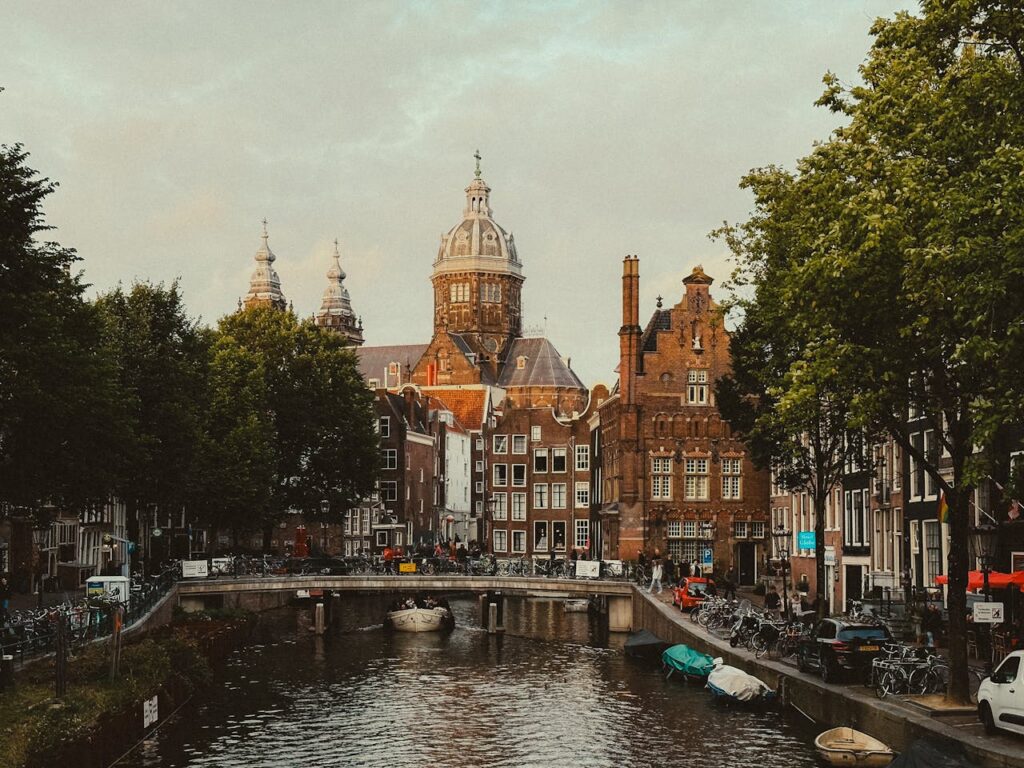
When I arrived here in the 1990s, Amsterdam was dirty. Spiritually and literally.
Sex was literally everywhere. Before the internet there were establishments with ‘private video booths,’ and not just in the red light district. A rack of vulgar postcards stood in front of every tourist shop. Raves, combined with drugs and alcohol, created a raw, underground feeling that led to hooking up. Fetish parties had ‘darkrooms,’ and the gay scene was the best (and worst) in the world.
The streets were dirty too. Dog shit was everywhere, and somehow that was okay. Tiny, always-full green plastic garbage cans were one quarter the size of today. We accepted this too as if fast food did not exist, and people only threw away empty cigarette packs and Sportlife gum wrappers.
Getting a cleaner city was a long, slow journey, but we succeeded. More effective government, bigger garbage cans, better citizens and higher standards all helped. Flash forward to five years ago. People now cleaned up after their dogs. Regulations banished the sex postcards. Gay nightlife was destroyed by Grndr (and more inclusive socializing).
The real problem was that the city’s garbage department saw its job as cleaning up at the end of the day. They did not see it as their job to maintain a clean city. This meant that starting at 15:00 on Friday, garbage would pile up around the already overflowing cans, to be cleaned up at 6:00 the next morning, before the city woke up.
Most importantly two things changed. First, we replaced the 30 liter green bins on a pole with (after a inadequatre misstep to 50 liter cans) to the 120 liter brown, steel cans of today. And second, after garbage trucks picked up bagged, household trash, a team of human sweepers would brush the remains into the street where a street sweeper vehicle would suck them up. The streets were left clean.
It all changed in 2023.
In April, the national government implemented a comically poorly thought-out recycling plan. There is plenty of blame to go around, but let’s start with Groenlinks/PvdA/SP who pushed hardest in 2018-19 and Stientje van Veldhoven from D66 who helped make it law in 2021. In order to raise the can recycling rate from the then 77% to 90%, the Dutch government added a €0,15 deposit to cans.
While more recycling is generally better, this plan had huge problems. It assumed all canned drinks were consumed at home, where many people do recycle.
But what about people who buy a drink on the street, at a train station, in a movie theater, at a concert or at the airport? We have no way to return it. You can’t put a dripping Coke can in your pocket, so we throw it away. Yes there is a recycling machine in the back of Amsterdam Central and I’m sure in Utrecht and Rotterdam too, but come on.
We should have just placed recycling bins for cans and plastic bottles in public spaces. Next to the regular garbage cans. For free. No deposit. Then we would just recycle. At stations you could just repurpose the newspaper recycling containers because, uh, this is 2026. No one reads paper newspapers. (I do actually. I learned Dutch so I could read het Parool).
Retail outlets won’t take them back, and how could they? What would they do with them and how would they pay us our €0,15 in a cashless society? So we throw cans in the garbage, doing our part to not litter and keep the city clean. Then people at the fringes of society collect them and brings huge bags to collection points like Droppie on the Vijzelgracht.
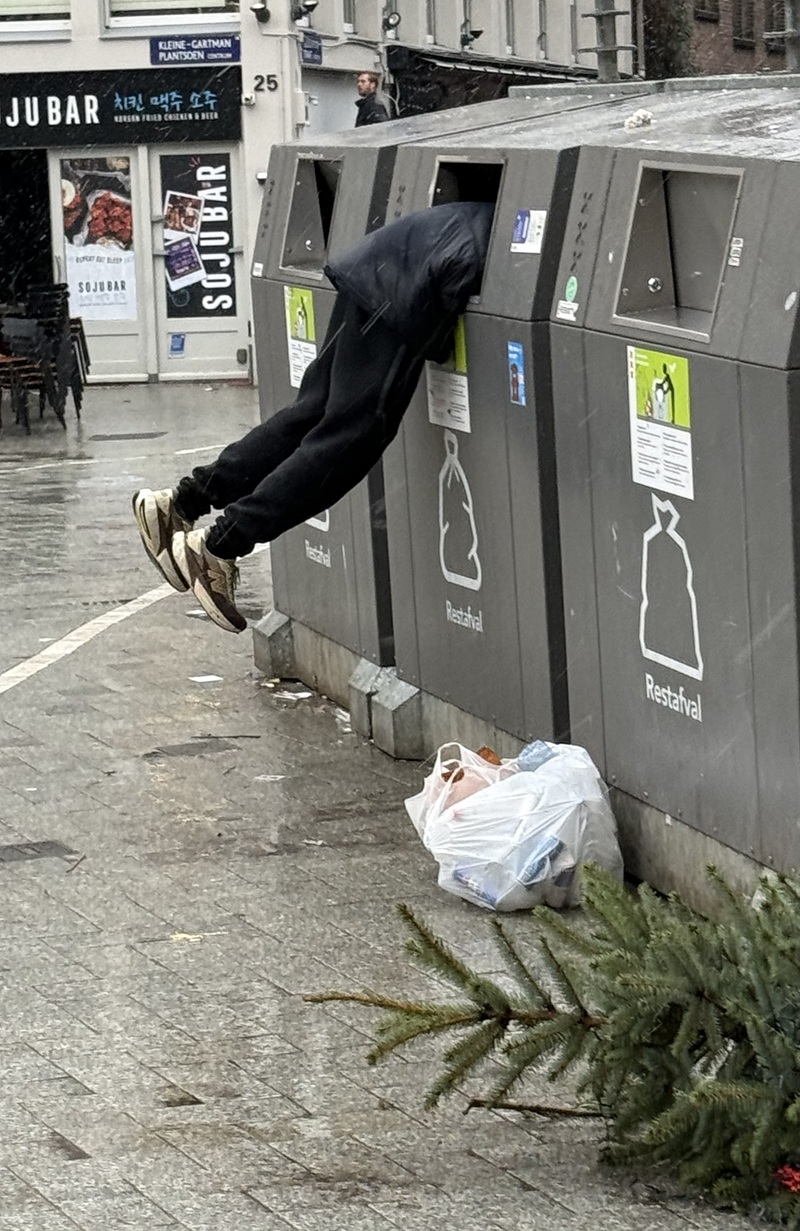
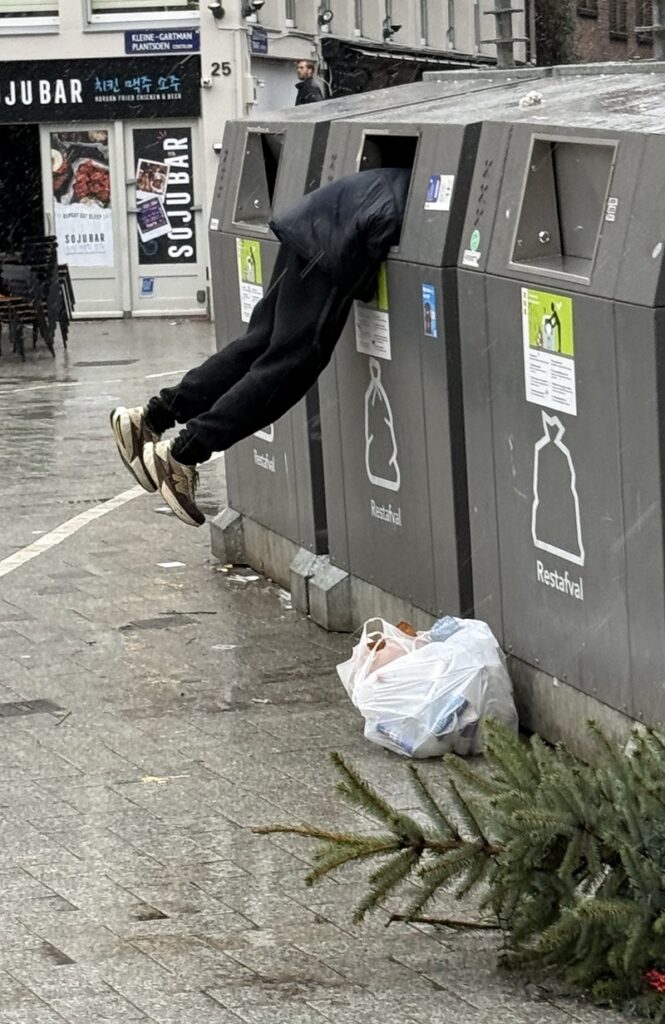
But unlike sanitation workers, the scavengers are not concerned with garbage. They damage our beautiful, €1000 garbage cans. They slice open household garbage bags. They get the money, we get dirty streets, and our politicians were surprised.
Around the same time as the deposit introduction, some high priced consultancy advised the city to be more efficient with its street sweep teams. KPMG, or whoever it was, said the the ‘sweeper trains’ could be more effective if they didn’t follow slower moving garbage trucks and city ambtenaren defered to their better paid private consultants. Now garbage trucks left a trail of loose garbage that the wind was happy to spreed over a whole neighborhood. Deposit scavengers plus this change made the city the dirty mess it is today. Illegal dumping next to underground containers earns an honorable mention.
And what have we gotten for the environment? The can collection rate has gone from 77% to 83%, (not the goal of 90%). To be fair, we probably deliver a higher-quality material stream since the cans are separated earlier, rather than at the dump.
But is a 5% increase in recycled cans worth the big price we pay in Amsterdam? There are €4 million in extra cleaning costs each year, Importantly, this doesn’t include the broken garbage cans. A pro-deposit group reported that 12% of the cans were broken on a day their studied, but I bet that today that number is more than 25%. In the center, they are almost 100% broken. With perhaps 12.000 cans in the city, 25% would 3000 x €1000 = €3 million more in deferred maintence. PLUS dirtier streets.
If we want a dirty Amsterdam, let’s bring glory holes in clubs. They at least made two people happy. But I dream about 950.000 happier Amsterdammers and a clean city, one that we had not that long ago. And replace the broken garbage cans.